
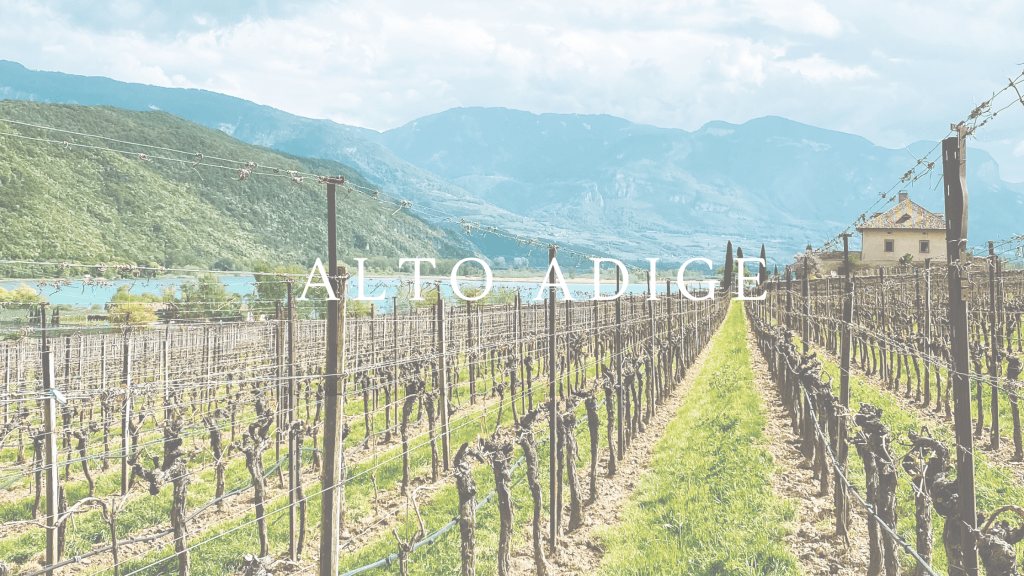
A less talked about wine destination compared to its southern cousins, Alto Adige is the northernmost region of Italy and is the perfect place for a wine tasting holiday.
As soon as you cross the border Alto Adige’s roads are flanked by vineyards, emerald lakes, grey purple Dolomite mountains, and almost too picturesque towns. Alto Adige’s unique location gives way to very hot summers and cold winters, so wine tourism is open in all seasons – on a skiing or summer holiday.
As a wine passionate tourist, here are 4 reasons on why you need to put Alto Adige next on your wine infused vacation list.
- They speak English.
I hate to say it, but being a foreign tourist in Italy who doesn’t speak Italian can be quite a challenge sometimes. Because of the rich history in this part of Italy their first language is German. This leads them to be much more language diverse, almost everyone working in Alto Adige will speak some English.
It definitely makes it easier as an English speaking wine tourist when staff at wineries are used to giving tours and tastings in English.
- They have open hours at the tasting rooms.
Most wineries have an open wine shop with continuous hours where they do full tastings as well. Some are paid, some aren’t, but their focus on tasting culture makes it quite easy to pop in, taste their wines, buy a bottle, and even chill and have a full glass. Wineries have a flexible and organized set up which helps to make your job as the wine tourist that much simpler.
- Wineries are close together making it easy to experience more than one.
For wine, the province is divided into 7 subregions, each of those regions are quite compact when it comes to winery and wine growing areas. It is great that within a 30 minute drive you can pass 5-35 wineries, with a total of 196 registered wineries in Alto Adige alone! This is especially true in southern Alto Adige, where the Strada del Vino is packed with wineries around almost every bend.
4. Alto Adige’s tourism websites really cater to tourists to help you plan your trip.
Rarely do you see such organized and helpful information to not only be a tourist, but specifically a wine tourist. Winery information, activities, hotels, with the addition of well laid out maps and routes for cycling the Strada del Vino to visit wineries by bike.
These helpful websites will help you get around and plan your trip.
Tourism board website link. Wine road “Strada del Vino” website. Alto Adige wine website.
The Alto Adige wine website is incredible, it includes all of the grapes of the region, characteristics, how much is produced, and the wineries that produce them. It is very easy to navigate, and a great tool. When places have a website like this it helps you narrow things down and choose what you really care about experiencing.
If you do visit this extremely beautiful location for wine tourism I suggest a basic knowledge of the wines they produce so you can enjoy your experience with as much confidence as possible. All 7 regions of Alto Adige have both Italian and German names, and most wines presented will also be in their German and Italian names.
Traditionally Alto Adige was the home to predominately red wines, but they are now highly renowned for their whites, and all wines are of high quality.
Red wines you should keep your eyes out for are:
Lagrein – warm, rich, spicy. Grown best in the Bolzano (Bozen) region.
Schiava – traditional, delicate, light, refreshing. Found in the Merano (Meran), Bolzano (Bozen), and Oltradige (Überetsch) regions.
Pinot Nero – light yet spicy, some of the best PN in Italy, grows best in the region of Bassa Atesina (Unterland).
White wines to keep your eyes out for are:
Gewurtraminer – traditional, rich, aromatic, particularly in the region Bassa Atesina (Unterland).
Pinot Bianco – fresh, complex, expressive, best grown in the Val d’Adige (Etschtal) and Val Venosta (Vinschgau) regions.
Sauvignon Blanc – crispy and fresh, yet really a unique Sauvignon Blanc, grown best in the Val d’Adige (Etschtal) region.
Muller Thurgau – traditional, usually grown on steep slopes at high altitudes.
Sylvaner – finding its own home south of Germany, a very interesting find! Best known from the Valle Isarco (Eisackta) region.
I hope this helps to convince you to visit Alto Adige, I have love all of my wine tasting trips there, and I can’t wait to go back. A bonus is that Alto Adige’s capital city of Bolzano is mix of tradition and fun with everything you are looking for in a small city; packed full of shops, restaurants, museums, surrounded by mountains and wineries.
The ease at which it is to be a wine tourist in Alto Adige, the combination of German and Italian influences, and the true South Tyrol character make this place incredibly unique. Hopefully Alto Adige is on your wine tasting list, and its wines find their way to your glass.
 Gamma Import & Co.
Leave a comment